Quickly and easily cook delicious ramen using just one pan.
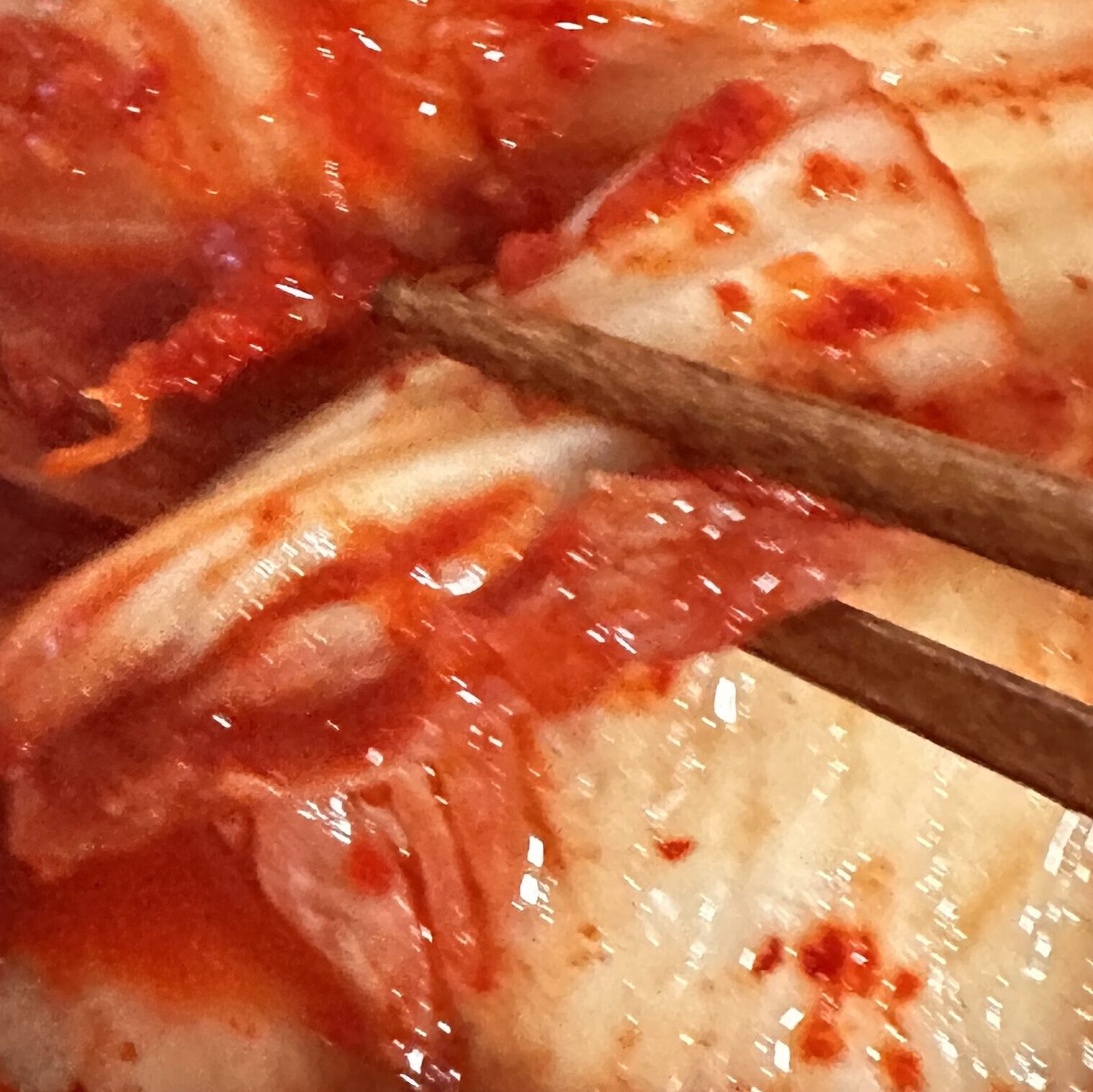
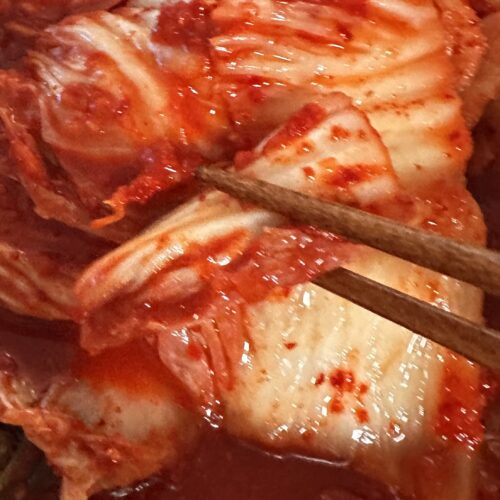
My kimchi has finally reached its peak flavor.
It turned out wonderfully—tangy, sweet, and packed with rich flavor.
When kimchi tastes this good, you naturally start thinking about what to pair it with, and for me, the answer was simple.
There’s no doubt that kimchi and ramen are a perfect match.
However, when kimchi is perfectly fermented, Koreans think of a variety of dishes beyond just ramen. Suddenly, I find myself craving things like spicy kimchi noodles, kimchi fried rice, kimchi pancakes, and kimchi stew.
But today, I chose ramen.
It wasn’t just because I wanted ramen…
It was because the kimchi had fermented to perfection, developing a tangy, sweet, and deeply flavorful taste that was simply irresistible.
While the noodles were cooking, I kept snacking on the kimchi. Honestly, with kimchi this good, I could easily polish off a whole bowl of rice before the ramen is even ready.
That’s the magic of perfectly ripened kimchi.
Ramen.
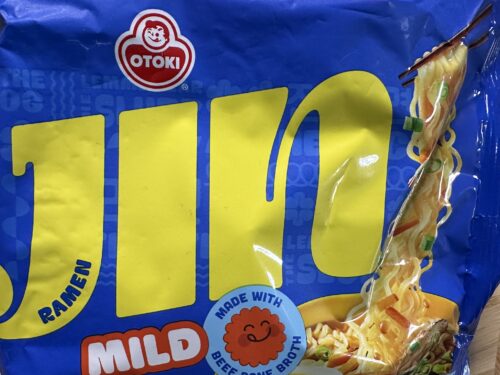
Why I Chose Jin Ramen
I’ll admit it.
Part of the reason I bought Jin Ramen was because I’m a BTS Jin fan.
But after trying it…
I realized I kept buying it for a completely different reason.
The noodles.
They’re pleasantly chewy, hold their texture well, and pair beautifully with fermented kimchi.
The mild beef broth is clean and comforting, letting the kimchi shine instead of competing with it.
Sometimes the simplest meals are the most satisfying.
So today, I made Jin Ramen two different ways.
Kimchi in the Ramen or Kimchi on Top?
Some people like cooking kimchi directly in the soup.
Others enjoy adding kimchi after the ramen is finished.
I’ve tried both many times, and this is what I personally prefer.
I cook my ramen exactly as the package recommends.
Why?
Because I think the ramen was designed to taste its best that way.
The noodles stay springy, and the broth keeps its original balance.
Then I simply place a piece of perfectly aged kimchi on top with every bite.
For me, that’s the perfect combination.
Two Ways I Enjoy Jin Ramen
This time, I made Jin Ramen two different ways.
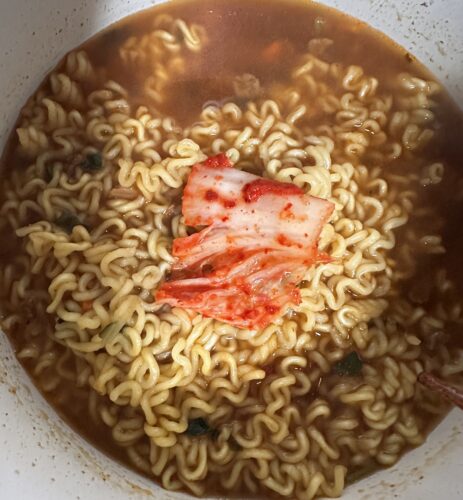
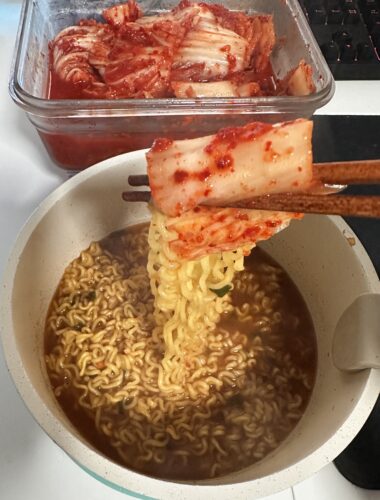
- The first is the classic way—just following the package directions and enjoying it with perfectly fermented homemade kimchi on the side.
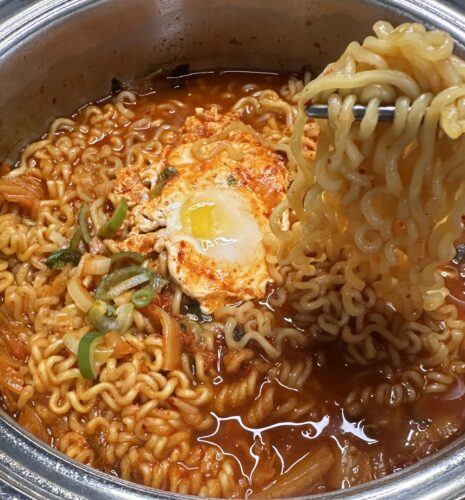
- The second is a kimchi ramen, where the kimchi is simmered together with the broth. As the kimchi cooks, it adds a deeper, richer flavor and turns the soup into something completely different.
Both are delicious.
It just depends on what I’m craving that day.
*The first is the classic way
My Favorite Way
As for me… When I’m eating the original Jin Ramen, I actually prefer adding nothing at all.
I love tasting the noodles and the broth exactly the way they were intended.
Then I simply enjoy each bite with a piece of homemade aged kimchi. Simple.
Comforting. Perfect. Because when the kimchi is this good, it doesn’t need anything else.

My Egg Rule
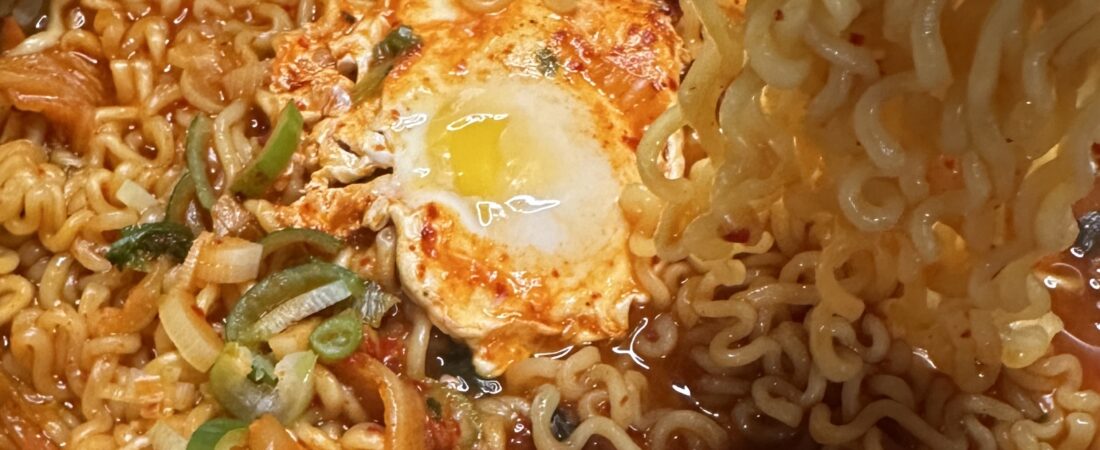
When I make kimchi ramen, I always add one egg.
But here’s my little rule:
I never break the yolk.
Keeping the egg whole lets me enjoy the extra protein without changing the broth too much.
Once the yolk mixes into the soup, the broth becomes richer and creamier, but I think it also softens the bright, spicy flavor of the kimchi.
So I leave it whole and break it only when I’m ready to eat.
*The second is a kimchi ramen (Kimchi Ramen )
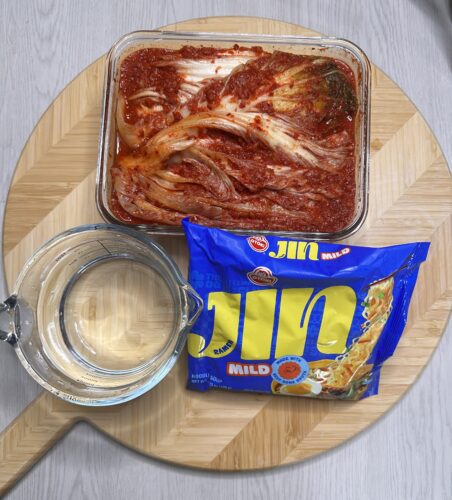
Ingredients
- 1 package Jin Ramen (or your favorite instant ramen)
- 650 ml (about 2¾ cups) water
- ½ cup well-fermented kimchi
- 1 egg (optional)
How to Make It
- Bring 650 ml of water to a boil.
- Add the kimchi and let it come back to a full boil.
- Add the noodles, soup base, and vegetable flakes.
- Cook for about 4 minutes.
- If using an egg, gently place it on top during the last minute of cooking. Try not to break the yolk.
- Turn off the heat and enjoy while it’s hot.
🌿 Keasy Tip
I use 650 ml of water instead of the usual amount because the kimchi naturally seasons the broth as it cooks. The extra water keeps the soup balanced without becoming too salty.
I also prefer leaving the egg yolk whole.
When the yolk stays intact, the broth remains clean, bright, and refreshing—much like the clear, comforting taste of traditional Korean kimchi soup.
If you stir the yolk into the broth, it becomes richer and creamier. It’s delicious too, but it softens the fresh, tangy flavor that makes kimchi ramen so special.
There isn’t a right or wrong way—just two different experiences. I encourage you to try both and discover which one you enjoy most.
🌿 Keasy Tip: A Korean Word You Should Know
Koreans often describe a broth like this as “siwonhada (시원하다).”
Although the soup is served piping hot, siwonhada doesn’t mean “cold.”
It describes a broth that feels clean, light, bright, and comforting—the kind of soup that leaves your stomach feeling settled and satisfied rather than heavy.
That’s why I like keeping the egg yolk whole. The broth stays clear, allowing the fresh, tangy flavor of the kimchi to shine through.
Once you understand siwonhada, you’ll start hearing this word everywhere in Korean cooking.
Wrapping Up…
Today’s bowl of ramen wasn’t really about the ramen.
It was about the kimchi.
When kimchi reaches that perfect stage of fermentation, it quietly becomes the star of the meal.
Whether you enjoy it on the side or simmered into the broth, I hope you’ll discover your own favorite way to enjoy it.
And if you ever hear a Korean say, “The broth is siwonhada,” you’ll know they’re talking about more than temperature.
They’re talking about that clean, comforting feeling that makes you want just one more spoonful.
Happy cooking,
See you in the next recipe.
Leave a Reply